
Hints and Tips
FEEDING CUES

The secret to knowing your baby is hungry before he has even realised himself!
Watch for these early feeding signs and offer a feed while he’s still calm …
- Waving hands around
- Turning head as if looking for the breast
- Licking lips
- Sucking fists
- Fussing and restless
- Bobbing head
Crying is the final sign and uses up lots of baby’s energy so it’s best to try to start the feed before this stage.
TOO MUCH MILK
Are you having difficulty attaching your baby because your breasts are so full of milk?
- Try expressing a small amount of milk off by hand before you feed
- Express just enough to soften the breast, making it easier for your baby to get a mouthful of the breast tissue
- Feed often, every two hours, to empty the breast and make you feel more comfortable
- Your breasts will make more milk when you empty the breast so it’s important to try to express only enough to make you feel comfortable and not so much you are making excess milk i.e. more than your baby needs
Sometimes the ‘let down’ (part of the feed when the milk flows very quickly) causes the milk to spray out which can be too much for your baby. Let him come off and wait until the flow slows down .
- Don’t force your baby to keep feeding, he may feel he’s drowning!

- Lying down to feed may help with this problem as some off the milk can run off your breast and away from your baby’s mouth
- Feeding with your baby in a very upright position may help but not so easy with a very new baby or a caesarean wound
- There are products available to put into your bra to catch excess milk, breast pads, breast shells
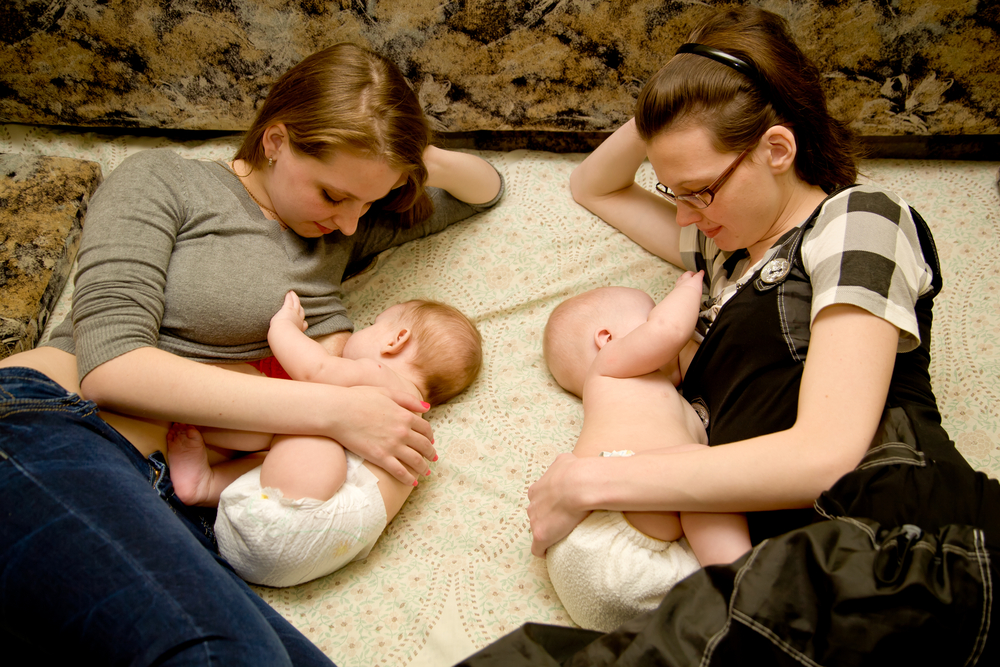
Have you got spare milk? If you’ve got loads of milk you may be able to do something to help others. Here’s how …
Some Neonatal Intensive Care Units have a Milk Bank where they keep expressed milk that has been donated by kind Mums who have lots of breast milk and find it easy to express. This milk is pasteurised and given to tiny babies that can only be fed on breast milk but who’s own Mums can’t provide it. It’s very precious and gratefully received. Hospitals will pay £100 for a litre of pasteurised expressed breast milk! Sometimes this milk has to be rationed and only given to the sickest babies as it’s in short supply. Ask your Midwife if your local hospital has a milk bank.
EXPRESSING MILK
Expressing milk can be done by hand or by a breast pump. The principal is the same,you need to get the milk flowing. Do this by:
- Massaging your breasts before and during expressing,this will encourage the milk to flow
- Put a hot flannel on your breasts just before you express to help the milk flow
- Have your baby nearby or look at a photo of him or her during expressing
- Have a skin to skin cuddle with your baby before expressing
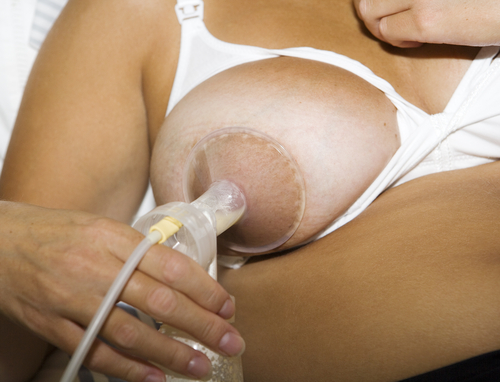 Remember, it can be difficult to express a lot of milk. The milk should be flowing for the pump to collect it … it won’t suck the milk out of your breast. Babies are better at taking the milk from the breast than the breast pump
In the first few days you will only be able to express a few drops of colostrum each time you express.
- Hand express only, for the first three days, as the tiny amounts of colostrum will get lost in the breast pump equipment
- Expressing milk by hand is very useful for relieving pressure when your breasts are engorged (over full of milk)
- It can be used to take off a little milk if your breasts are so full that your baby is having trouble attaching to the breast
Here’s how to do it (hand expressing)
- Make a c shape with your hand around your breast, a few cms back from your nipple
- Find the ridge a few cms back from your nipple and squeeze
- Squeeze with a rhythm
- Rotate your fingers around the nipple to drain all the ducts of milk
- Hold a sterile pot to catch the milk
- Take care not to drag your fingers over your skin as you’ll cause pain and damage to the breast tissue
When you need to express regularly (if your baby is on the neonatal unit, you need to increase your milk supply or if you are going back to work) it may help to use a breast pump.
- Check the equipment is the right size and fits your breast without slipping
- Turn the suction down and start with it low. Increase gradually but it should feel comfortable
- Build up the length of time spent expressing on each side gradually
- The milk must be flowing for the pump to collect it so massage and get the milk flowing!
- Expressing works best when you’re relaxed and not trying to rush
- Expressing, as with breastfeeding, shouldn’t cause pain. If it’s painful, stop!
- Double pumping (pumping both breasts at the same time) is beneficial and saves you time!
Expressed breast milk
- Milk can be saved in a sterile container and kept in the fridge for a few days below 5 degrees C (not in the fridge door as the temperature here is slightly higher) or in the freezer for 3 months
- Defrost milk at room temperature, or in the fridge
- Once it has defrosted it will keep for 24 hours in the fridge
- Never defrost in the microwave as it may heat up unevenly and burn your baby
- Stand the bottle in warm water to heat it up to room temperature
- When you’re ready to feed your milk to your baby in a bottle, shake the bottle first as all the good fats separate and stick to the sides of the bottle while it’s stored.
MAKING MORE MILK

The secret to a good supply of milk is to empty your breasts frequently either by feeding your baby or expressing the milk off. If you want to increase your milk supply you can do both i.e. breast feed and then a short time of pumping after the feed. To increase your milk supply you’ll need to feed your baby often – about 8 – 12 times in 24 hours.
It’s useful to understand how breastfeeding works
When your breasts are full milk production slows down. When they’re empty milk production speeds up. The milk contains a hormone that inhibits milk production so when the breast is quite full of milk there’s lots of the hormone stopping milk from being made. When the baby drains the breast the hormone is no longer there to stop the milk production. Therefore more milk will be made.
Your baby will instinctively know how to increase milk supply and will want to feed more often when he needs to increase the milk.
Beware of things that can interrupt the natural process of milk production
- timing feeds and only allowing baby to feed at certain intervals (a routine will develop gradually over the next few months if you follow your baby’s pattern)
- poor attachment to the breast (it can look as if your baby’s feeding but see the signs that your baby’s having a good feed, to check)
- using pacifiers in the early days before breastfeeding is established (this will mask the important feeding signs you need to look out for)
- giving top ups of formula milk (your baby will take less milk from the breast, slowing down milk production)
- being separated from your baby (you will need to express milk regularly to keep up milk production)
- problems such as a tongue tie or inverted nipples (seek professional help)
New Mums are surprised by how much time is taken up with feeding their newborn baby. There is often pressure to ‘get into a routine’ as it’s all so chaotic and overwhelming. This will happen gradually over the next few weeks as the breastfeeding becomes established. Sometimes you’ll think that there is a pattern emerging and then it all changes again. This is normal.
Feeding your baby takes up a lot of your day, and night, in the early days. It also takes a lot of energy and you’ll need to rest. When your baby is older you will spend time planning meals, shopping for the food and preparing and cooking the meal. Then there’s the clearing up!
When you’re breastfeeding you can prepare the whole meal for your baby by sitting down and resting. Your breasts will make the milk to be perfect for your baby at the age he is. No need to feel guilty about sitting down! Think of it as preparing a meal for your baby.
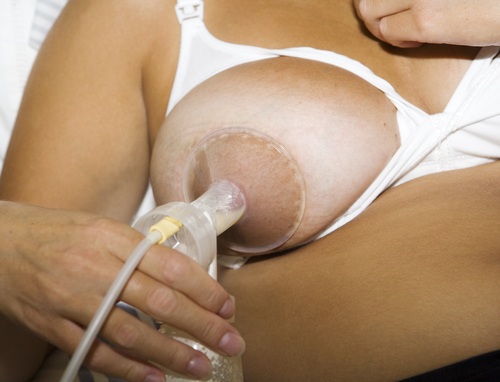
- To increase your milk supply you should do at least one feed during the night between midnight and 5 am to boost your hormone levels
- If you can’t feed your baby as you’re not together at the feed time, you should express your milk as often as you would feed him. At least 8 times in 24 hours
- The more milk you take out, the more your body will make, so feed often and offer the breast to baby when you feel full
- Check your baby is well attached to the breast and draining it during the feed .Do you feel less full after a feed? If it’s not being drained of milk your baby may not be well attached. Follow the ABC to check your breastfeeding technique.If you’re struggling ask for help
- Have a skin-to-skin cuddle with your baby. This has lots of benefits and will encourage your baby to feed as well as helping to increase your milk supply. Refer to section Skin-to-Skin Cuddles below.
- Ensure you’re eating regular meals and snacks and drinking plenty of fluids. Breastfeeding uses about 500 more calories so you may feel much more hungry than usual.
- When your baby is having a growth spurt he may want to be fed much more often and for longer than usual. This is him increasing your milk supply. It may feel like he’s constantly attached but it won’t last long so go with it.
SKIN-TO-SKIN CUDDLES
Skin-to-skin contact with your baby can be very useful and has been shown to have many benefits.
Benefits of skin-to-skin cuddles

- Reduces stress of Mum and baby
- Calms baby
- Increases Mum’s milk supply
- Promotes bonding (Dads can do it too)
- Regulates baby’s temperature
- Promotes interest in feeding
Do you know how to have a skin-to-skin cuddle?
- Undo your top or remove clothes so chest is bare
- Remove your baby’s clothing (except for the nappy – unless you’re very brave)
- Lie your baby on your chest
- Put a blanket over your baby to keep warm, although he will get warmth from you
- This should be done for a least an hour in order to get the real benefits
If you have not yet had your baby, ask your midwife for a skin-to-skin cuddle as soon as your baby is born!
GETTING BACK TO NORMAL

Going out with your baby for the first time can be exciting and daunting. Friends and family will want to meet him. It’s also helpful to meet up with other Mums so you can support each other. Confinement after the birth can make you feel lonely and isolated so it’s important to go out as soon as you feel strong enough.
Once you’re confident in breastfeeding, you will be able to do it anywhere! The beauty of breastfeeding is that you don’t have to take anything with you in order to feed your baby. The feed is always ready at the right temperature. Baby milk to go …
A shawl or wide scarf will provide privacy if you feed in public.
Shops and cafes which are ‘baby friendly’ will have a sticker in their window.

This means they welcome breastfeeding Mums.
Some shops have a nursing area. You will probably meet other Mums and be able to swap advice and information.
Remember breastfeeding is natural, if people have a problem with it, it’s their problem!
Plan your outing to make it go smoothly. Here’s how …
- Wear something that you can easily lift up or open to breastfeed. (There are clothes made especially for discreet breastfeeding)
- Get everything together in your changing bag. Have at least one complete change of clothes for your baby, newborn poo goes everywhere!
- Feed your baby just before you leave the house. Let your baby finish the feed, don’t rush him. This will mean he’s satisfied for longer
- Check where you are able to feed and change your baby. Plan on being near there when the next feed is due. Starbucks, Ikea, John Lewis, Mothercare are a few places that welcome Mums and babies
- Stop and eat before you’re really hungry and tired. When you’re breastfeeding this can overwhelm you quickly, making everything seem daunting
- Keep it short. You will be tired. Having a successful outing will build your confidence for next time
- Carry a pot of hand sanitiser so people can clean their hands before handling your baby.
FEEDING TWINS OR MORE

Breastfeeding twins or more will take up a lot of time and energy. You will need help at home with the chores and lots of support with breastfeeding.
Most of all you will need to take care of yourself because staying hydrated, rested and eating enough calories will be essential to your success. Your breasts will be able to supply enough milk to feed more than one baby.
- Keep your babies close especially at night so you don’t have to wake up too much
- Where possible feed your babies lying down to rest
- Using a ‘v’ shaped cushion to rest your babies on may make it easier to feed both babies at the same time (NB cushions may make your baby too high up)
- Some Mums prefer to feed their babies one at a time using one breast for one and changing to the other side for the next baby
- It can be even harder to remember which side you last fed from with twins. Keep a loose hair-band round the wrist of the last side you fed from so you can keep track of which side to start with next time
- In the early days keep a chart on who fed when and the wet and dirty nappies
- Focus on the babies and their own feeding cues rather than looking at the clock and expecting them to feed at a certain interval
- Often triplets will have started life on a neonatal unit with Mum expressing milk for them.
- Advice from one Mum of triplets was that even when home she expressed her milk so it could be shared between them, so she knew how much they were all getting. It also means someone can feed one baby expressed breast milk by bottle as Mum breastfeeds the other two.
- Don’t forget to give yourself a pat on the back for doing an amazing job!
THE MAGIC OF MILK

Colostrum is the first milk you make. It is only produced in tiny amounts because it’s so special your baby only needs a few drops at each feed (and his stomach is only the size of a hazelnut). Perfect for your newborn baby:
- It contains lots of protection against infection
- It packs a lot of nutrition into a tiny volume as your baby can only drink small amounts at this stage
- It encourages your baby to open his bowels to pass the meconium (black,sticky first stool)
Breast-milk replaces colostrum around day 3 after delivery. You should notice your breasts feeling much fuller as you start to replace colostrum with milk.
Breast-milk contains:
- Enzymes and digestive factors that help your baby to get the goodness (listed below) out of your milk. All milks contain goodness but our bodies can’t always absorb them without the special enzymes contained in breast-milk
- Protection for your baby’s gut
- Antibodies to fight infection
- Immunity to prevent ear infections, bladder infections and cancer
- Immunity to prevent asthmas and excema
- Factors that support growth of your baby’s brain and body
- Both a thirst-quenching drink and a nutritional meal. The milk changes during the course of the feed, beginning watery and thirst-quenching and gradually containing a higher fat content towards the end of the feed. Your baby will do a quiver-like suck at the end of the feed when he’s getting the last drops of fat which he needs.
Beware …
Stopping your baby feeding before he’s finished may mean he won’t get the rich, filling milk and won’t be settled for as long!
Amazing facts;
If you’re ill, your milk will contain some antibody to fight the infection you have, so it passes to your baby and protects him. For this to work you need to keep your baby with you close by.
Neonatal units will pay milk banks £100 per litre of mums expressed breast milk because it’s so precious to premature and sick newborns who can’t digest cow’s milk!
Your milk will also contain:
- Traces of the food you eat and what you drink
- Seek medical advice before taking alcohol and medications.
WINDING
Winding your baby is helping him to bring up the air in his stomach that he has swallowed. For this it’s better for him to be upright with a straight back.
There are several ways to wind your baby:
- Sit him upright on your knee with one hand under his chin supporting his head.With the other hand gently pat and rub his back
- Hold him over your shoulder, using one hand to hold him and the other to pat and rub his back. Put a muslin cloth over your shoulder first to protect your clothes
- Lie your baby across your knees on his tummy and pat and rub his back
Top Tip …
When the burps don’t seem to be coming up, try lying him down in his cot and gently moving his legs in a circular motion or let him kick around. Then sit him up slowly. I found this was useful at night when you’re trying to get them settled off to sleep and as soon as you lie them down they start squirming and wake up. Slowly sit him up in the cot without picking him up. After he has burped lie him down slowly.
WEANING
Stopping breastfeeding.

There comes a time when it’s right for you and your baby to stop breastfeeding. Sometimes Mums come under pressure to give up before they want to, or to feed for longer than they want. Your body, your choice. Do what feels right.
If you’ve exclusively breastfed your baby and are now thinking about stopping, here are some tips to help you.
Your baby will need to drink milk from a bottle or beaker/cup. If your baby is under one year these will need to be sterilised.
Speaking from my own experience, my children refused bottles so I weaned them off the breast onto a lidded cup (beaker) at one year. This is how I did it (please speak to your health visitor for specific advice).
Weaning at a year old was convenient because:
- sterilising is no longer required
- Babies can drink the milk the rest of the family have (full fat only)
- Babies are learning to walk and explore the world so they are distracted from the change in feeding
- They respond to other ways of comfort and love at this age so the closeness of the breastfeed can be replaced with cuddles, story books and snacks
- They are still very adaptable and open to change
When you’ve made up your mind to stop, drop one feed at a time:
- Choose a daytime feed
- Replace it with either formula milk or full fat milk if your baby is over a year old
- Allow your body and baby to adjust to this over a few days. When you no longer feel full drop another day time feed. Your breasts may feel slightly fuller than usual initially but this will settle down
- Eventually you will be left with the last feed in the evening and first feed in the morning
- I chose to keep the early morning feed going for the longest as they would often fall asleep after it and I could go back to bed!
- If your baby associates the last feed at night with settling down and going off to sleep, you will need to change your routine and find other ways of settling him
- You may like to keep on these two feeds for a while before completely stopping. This will give your baby time to adjust to other ways of feeding and getting used to falling asleep without the breast if he is used to that
- Take your time if you can. You will both need to adjust
If your baby’s using the comfort of the breast to fall asleep, you’ll have to help him settle without. This may take a bit of perseverance but it’s not a big problem and definitely will work out in the end.
Having a routine is helpful, such as bath, bottle, story, bed. Stick to it so baby knows what to expect and feels secure even though there are changes happening.
Occasionally plans to wean off the breast get upset because of an ear infection, holiday or visiting relative. Taking a step back and giving some extra feeds again isn’t a problem. Your body will adapt. Begin weaning again when the time’s right.
If your baby has been waking in the night for feeds,it can be difficult to not let baby feed when he’s crying and you’re tired. Don’t worry about giving in and feeding. In the end it will work out.
Giving up breastfeeding can make you feel quite emotional. That’s normal. Your baby still needs you in lots of other ways.
HELP!
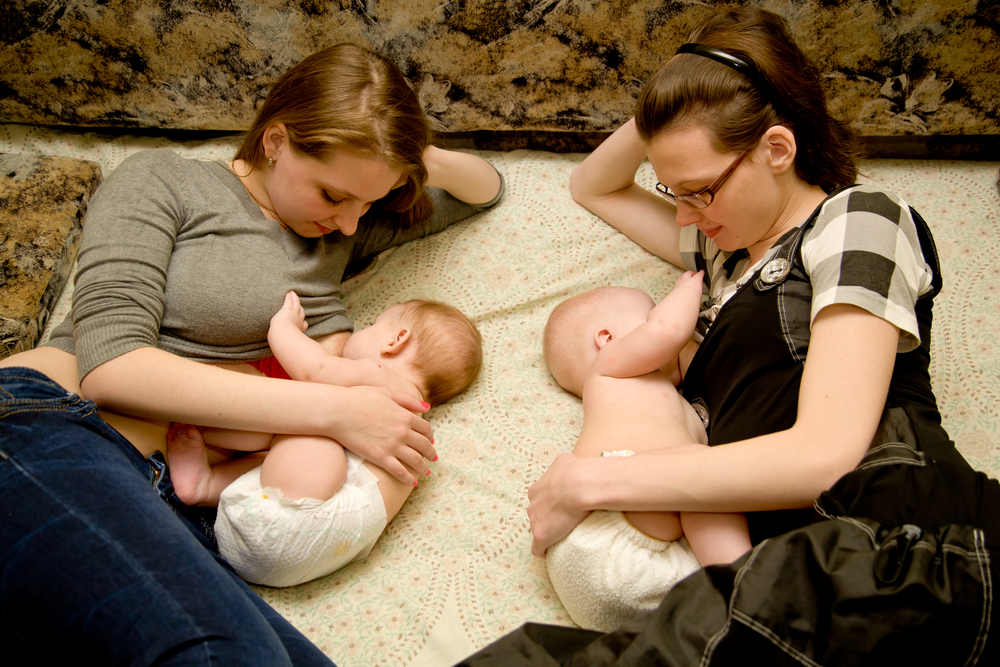
Some things that often stop Mums breastfeeding …
- Well meaning relatives who didn’t breastfeed and don’t think you should either. This is your baby and your choice. Talk to people who will support you. Maybe they didn’t breastfeed because they didn’t have the support.
- Fear that you can’t do it. Give it time! If your baby is a full term, healthy baby, he’ll have plenty of reserves to see him through a couple of days while you both learn to breastfeed.
- Lack of support in the early days. Find someone to support you who has breastfed their children or who is trained to help. Find a breastfeeding workshop (ask your health visitor).
- Finding that it’s harder than you expected or painful and feeds are frequent, taking up a lot of time
It can be a struggle initially. Give it time!
Persevere and within a week or so it will save you time and lots of money!
Talk to other Mums but remember that your baby may not be doing the same as their’s.
You are all individual!
Breastfeeding shouldn’t be painful.
Get some help!